Pool and Beach Towel Buying Guide for Hospitality Buyers
Buying guide
Pool and Beach Towel Buying Guide for Hospitality Buyers
Resort and hotel buyers need towels that hold up to daily pool use, sand exposure, and frequent laundering while controlling replacement costs. This guide explains how to match towel size and weight to guest volume, plan for seasonal wear, and set inventory controls that reduce loss.
Quick answer
Choose 30×60 inch or 35×70 inch towels in 400-500 GSM for standard pool programs. Plan on 1.5 towels per guest room per day plus 20 percent spare stock for peak periods. Rotate stock weekly and replace every 12-18 months in high-chlorine environments. Track checkout with numbered tags or RFID to cut loss rates below 15 percent. Order in consistent colors and weights to simplify laundry sorting and bulk replacement.
- Select 400-500 GSM towels in 30×60 or 35×70 sizes to balance absorbency and drying speed for pool decks.
- Build inventory at 1.5 units per room plus 20 percent buffer to cover turnover and damage without overstocking.
- Use color-coded or tagged towels to simplify guest checkout tracking and reduce annual loss below 15 percent.
- Factor chlorine and sand abrasion into replacement cycles of 12-18 months for high-traffic pool areas.
- Order the same weight and size across seasons to maintain uniform laundry processing and guest experience.
- Review occupancy data quarterly to adjust bulk orders and avoid both shortages and excess capital tied in stock.
Visual buying checkpoints
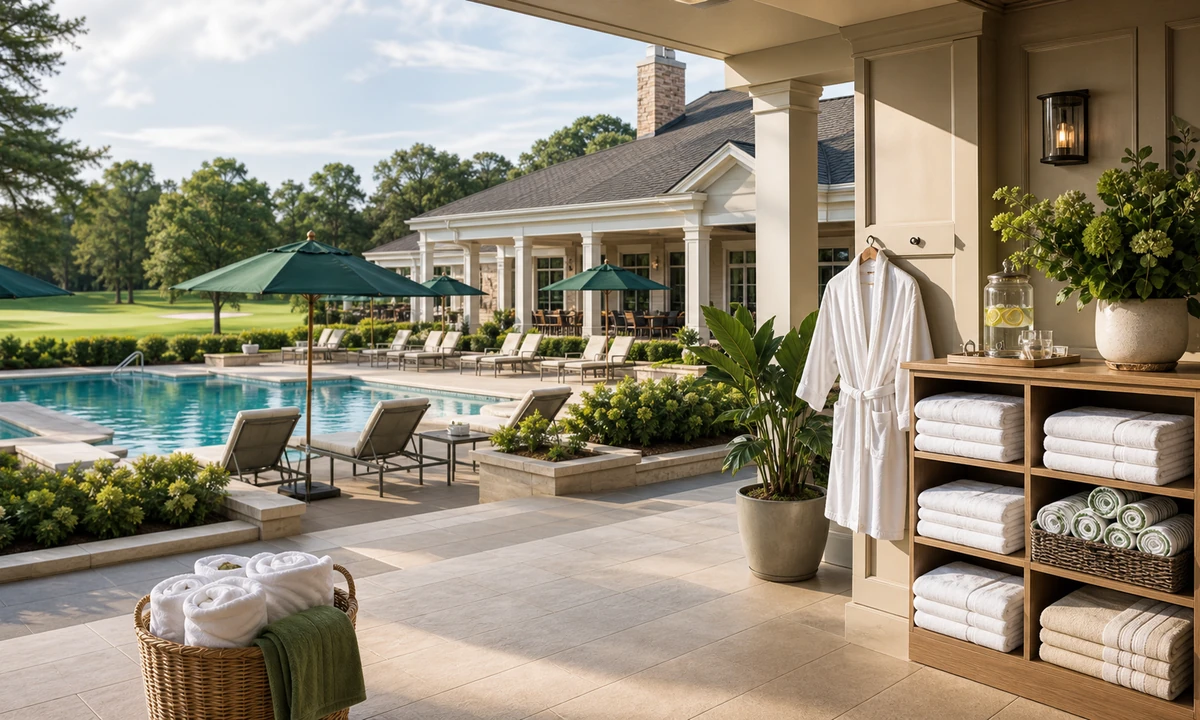
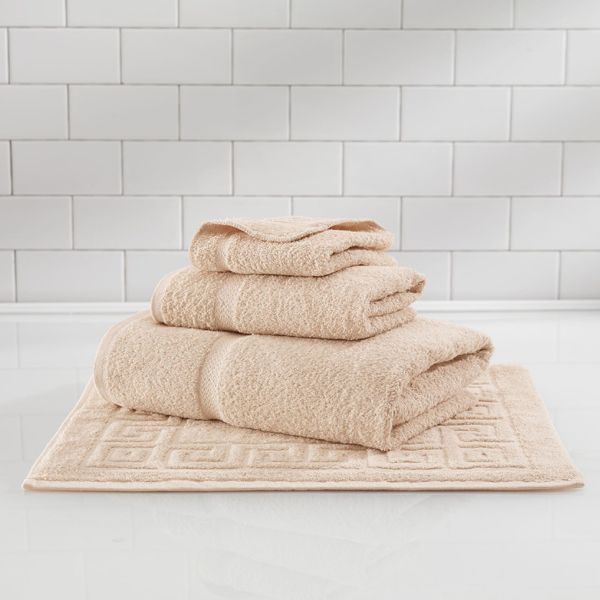
Choose Practical Towel Sizes for Pool Areas
Pool and beach programs require towels large enough for guest comfort yet compact enough to dry quickly on racks and fit standard laundry equipment. Thirty by sixty inch towels work for most lounge chairs and cover the average adult torso. Thirty-five by seventy inch sizes give extra length for taller guests or double use as a wrap. Avoid oversize options that increase drying time and laundry loads without measurable guest satisfaction gains. Measure your existing chair width and rack spacing before finalizing dimensions to prevent operational bottlenecks.
- Measure lounge chairs and drying racks to confirm fit before ordering new sizes.
- Test 30×60 and 35×70 samples for drying speed under your typical conditions.
- Standardize on one or two sizes to simplify folding and storage procedures.
- Avoid 40×80 or larger unless specific cabana or daybed programs justify the extra cost.
Match GSM to Usage and Laundering Frequency
GSM determines absorbency and durability under repeated chlorine exposure and industrial washing. Four hundred to five hundred GSM provides adequate water pickup for poolside use while still drying overnight. Lower weights reduce replacement costs but increase guest complaints about thin feel. Higher weights add absorbency at the expense of longer dry times and higher laundry energy use. Request sample packs from suppliers and run them through your actual wash cycle before committing to bulk quantities.
- Run 400, 450, and 500 GSM samples through three full laundry cycles before deciding.
- Track guest feedback on absorbency versus drying complaints for two weeks.
- Higher GSM increases initial cost but can extend replacement interval by several months.
- Confirm your dryer capacity can handle the added weight without extending cycle times.
Select Colors That Withstand Chlorine and Sun
Dark and bright colors show chlorine fade and sand stains faster than navy, teal, or charcoal. These shades maintain appearance longer in outdoor programs. White remains easiest to bleach but shows every mark. Consistent color across seasons simplifies replacement and prevents mismatched stock on the pool deck. Request colorfastness test data for the specific dyes used and verify they match your existing linen program.
- Choose navy, charcoal, or teal to minimize visible fading over 50 wash cycles.
- Avoid pastels and bright yellows that show sand and sunscreen stains quickly.
- Maintain one primary color per season to simplify inventory counts and reorders.
- Request dye lot consistency documentation on repeat orders to prevent shade drift.
Build Inventory Controls Around Actual Turnover
Calculate daily usage from occupancy reports and add a twenty percent buffer for damage and loss. Maintain separate counts for pool deck stock versus room stock to avoid shortages during peak check-in times. Use numbered tags or simple barcode systems to log checkout and returns. Review loss reports monthly and adjust par levels before the next season begins rather than reacting after stockouts occur. Consistent sizing and color reduce counting errors during physical inventories.
- Set par at 1.5 towels per occupied room plus twenty percent spare for peak days.
- Separate pool deck and guest room stock to prevent cross-contamination of counts.
- Implement daily checkout logs to identify loss patterns within the first month.
- Conduct monthly physical counts and reconcile against laundry return records.
Plan Replacement Cycles for Chlorine and Sand Wear
High-chlorine pools accelerate fiber breakdown and color loss. Expect twelve to eighteen months of service life for towels used daily at poolside. Sand abrasion shortens life further in beach locations. Track average wash cycles per towel and replace when absorbency drops or edges fray. Seasonal bulk replacement in off-peak months prevents mid-season shortages and allows negotiation on pricing for larger quantities. Keep a small reserve of identical stock for emergency top-ups.
- Log wash cycles per batch to predict replacement timing within two months accuracy.
- Replace when water pickup falls below guest acceptable levels or edges begin to fray.
- Schedule bulk replacement during shoulder seasons to secure better unit pricing.
- Maintain five percent emergency stock of the current spec for unexpected damage.
Reduce Loss Through Guest Checkout Procedures
Untracked towels disappear at rates above thirty percent without controls. Simple numbered tags or RFID systems allow front desk or pool staff to record issues and returns. Charge policies for non-returned towels recover some cost but more importantly change guest behavior. Combine visible tagging with clear signage at pool exits. Review loss data quarterly and adjust procedures before the next high season. Consistent enforcement across staff shifts is the largest single factor in lowering annual replacement spend.
- Issue numbered or tagged towels at check-in or pool entry and log returns daily.
- Post clear signage about towel return locations and replacement fees.
- Audit loss rates monthly and adjust procedures before peak occupancy periods.
- Train all shifts on consistent enforcement to prevent selective compliance gaps.
Compare Cotton, Blends, and Microfiber Options
Cotton provides the expected hotel feel and performs well in standard laundry chemistry. Cotton-polyester blends add durability and faster drying at a modest increase in cost. Microfiber offers quick drying and lower weight but changes the guest experience and may require separate laundry handling. Test each option for three weeks in actual use before committing to a full program change. Factor laundry equipment compatibility and staff training into the final decision.
- Run side-by-side tests of cotton versus blend for absorbency and dry time.
- Confirm your current detergent and bleach program works with any new fiber blend.
- Calculate total cost per use including replacement frequency for each option.
- Pilot microfiber only if drying speed is a documented operational bottleneck.
Align Orders With Seasonal Demand Patterns
Pool towel demand spikes during summer and holiday periods. Review last three years of occupancy and weather data to set order quantities. Place bulk orders four to six weeks ahead of expected peaks to allow for production and freight timing. Avoid carrying excess inventory through winter by ordering closer to need where possible. Maintain consistent specifications year to year so partial lots can be used across seasons without mismatch.
- Base order quantities on three-year average peak occupancy plus fifteen percent.
- Place orders six weeks before expected high-demand start dates for reliable delivery.
- Keep specifications stable to allow use of leftover stock across seasons.
- Review actual usage versus forecast after each season to refine future planning.
Estimate Annual Pool Towel Requirements
Use occupancy and turnover data to calculate baseline stock and annual replacement needs. Adjust the planning ranges for your specific loss rate and seasonal peaks.
| Scenario | Planning range | How to use it |
|---|---|---|
| 100-room resort, 70 percent average occupancy | 105-130 towels daily | Includes 20 percent spare for damage and checkout loss during peak months. |
| Beach club with 200 daily visitors | 220-260 towels daily | Higher turnover requires larger buffer stock and more frequent laundering. |
| Seasonal property open 180 days | Replace 60-75 percent of stock yearly | Concentrate replacement orders in shoulder season to control costs. |
| High-chlorine pool environment | Plan 12-15 month full replacement cycle | Track absorbency drop and edge wear to confirm actual service life. |
Towel Type Comparison for Pool Programs
| Type | Best For | Trade-off |
|---|---|---|
| 400 GSM Cotton | Standard guest comfort and absorbency | Longer dry time, moderate durability |
| 500 GSM Blend | Higher traffic and faster replacement cycles | Higher upfront cost, heavier when wet |
| Microfiber | Quick drying and low weight | Different hand feel, separate laundry sort |
| White Only | Easy bleaching and stain removal | Shows every mark and sand stain |
Decision flow
Define daily guest count and peak occupancy from last season data.
Select size and GSM based on chair dimensions and drying requirements.
Choose color that balances branding with chlorine fade resistance.
Set par levels with twenty percent buffer and implement checkout tracking.
Schedule replacement timing around seasonal demand and wash cycle logs.
Review loss and performance data quarterly to adjust the next order.
Common buying mistakes to avoid
Catalog examples for pool and beach programs
Pool and beach towel buying should be separated from indoor bath stock. These links make that distinction clear while still showing related towel options.
- 1888 Mills Fibertone Cabana Solid Pool Towels 30" x 60" – the first place to compare oversized outdoor towel options.
- 1888 Mills Crown Touch™ Bath Sheet 35 x 68 100% Cotton White-2 DZ. – useful as a comparison point for indoor towels that should not be used on sand or chlorine areas.
- 1888 Mills Crown Touch™ Bath Mat 21 X 32 100% Cotton 9.5 lb White Case of 5 Dozen – relevant when pool rooms, showers, or locker areas also need floor protection.
Shop related products
Use these product groups as starting points, then use Fast Order for repeat case ordering.
-
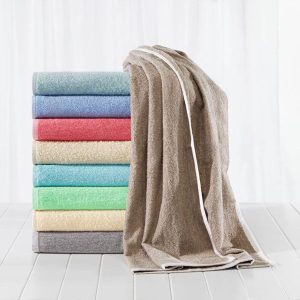
1888 Mills Fibertone Cabana Solid Pool Towels 30″ x 60″
$321.60This product has multiple variants. The options may be chosen on the product page -
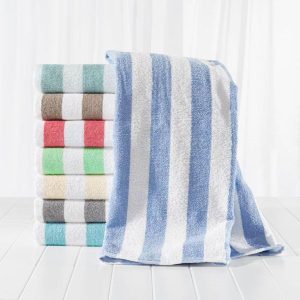
1888 Mills Fibertone Cabana Stripe Pool Towels 30″ x 60″ Case of 4 Dozen
$324.00Case of 4 dozen$81.00 per dozen$6.75 eachThis product has multiple variants. The options may be chosen on the product page -
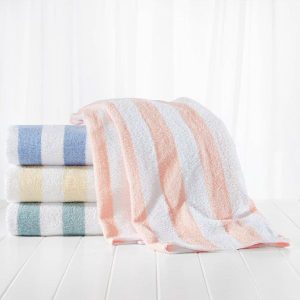
1888 Mills Fibertone Cabana Stripe Pool Towels 30″ x 70″ Case of 2 Dozen
$222.00Case of 2 dozen$111.00 per dozen$9.25 eachThis product has multiple variants. The options may be chosen on the product page -
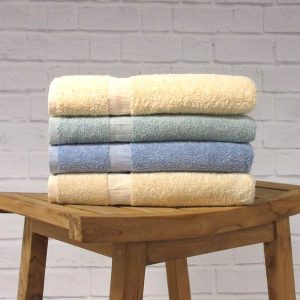
1888 Mills Fibertone™ Dobby Border Pool Towels
$324.00This product has multiple variants. The options may be chosen on the product page -
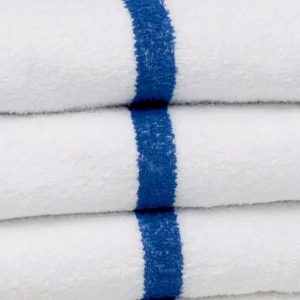
Blue Center Stripe Pool Towel 24″ x 44″
$300.48This product has multiple variants. The options may be chosen on the product page$300.48Carton of 8 dozen$37.56 per dozen$3.13 each -
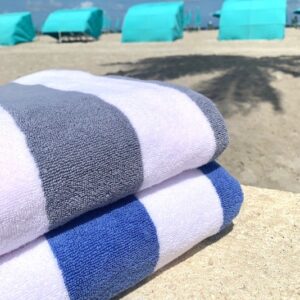
Breeze Luxury Pool Towels-Case of 2 Dozen
$447.60Case of 2 dozen$223.80 per dozen$18.65 eachThis product has multiple variants. The options may be chosen on the product page -
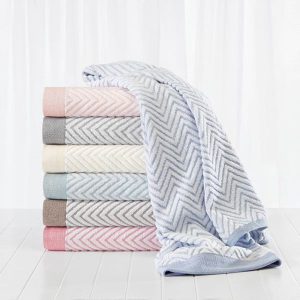
Chevron Fibertone Jacquard Pool Towels
$324.00This product has multiple variants. The options may be chosen on the product page -
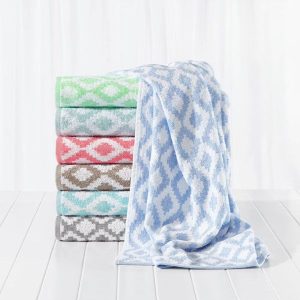
Diamonds Fibertone Jacquard Pool Towels
$321.60This product has multiple variants. The options may be chosen on the product page$321.60
Buyer FAQs
What size works best for standard lounge chairs?
Thirty by sixty inch towels fit most commercial lounge chairs and dry faster than larger sizes. Thirty-five by seventy provides extra coverage for taller guests if your racks can accommodate the added length.
How often should pool towels be replaced?
Plan on twelve to eighteen months in high-chlorine environments. Track actual wash cycles and absorbency drop rather than using a fixed calendar to avoid premature or delayed replacement.
How do I reduce towel loss at the pool?
Implement numbered tags or RFID at checkout and require returns at a single staffed location. Review loss reports monthly and enforce consistent procedures across all shifts.
Should I choose cotton or blends for outdoor use?
Cotton meets most guest expectations. Blends add durability and faster drying if your laundry can handle the change. Test samples through three full cycles before switching programs.
What GSM range balances cost and performance?
Four hundred to five hundred GSM covers most pool programs. Run samples to confirm drying time and guest feedback before locking in a single weight for bulk orders.
How much spare stock should I keep on hand?
Maintain twenty percent above daily usage to cover peak days and unexpected damage. Separate pool deck stock from room stock to avoid cross-use during busy periods.
Build the order
Contact towelwholesaler.com for current pool towel options and to request samples matched to your occupancy and laundry specifications.
Products to compare while using this guide
Use these products as examples while comparing specifications, sizes, and case quantities.