
Wholesale Towels for Janitorial and Commercial Cleaning
Cleaning and facility supplies
Wholesale Towels for Janitorial and Commercial Cleaning
Bulk towel and linen options for janitorial teams, facility managers, property services, and commercial cleaning companies.
Color-coded, bleach-safe towels that support daily commercial cleaning routes.
This page is meant to help a buyer narrow the order before looking at individual SKUs. Start with the operating environment, then choose towel or linen type, case quantity, color strategy, laundering expectations, and replacement rhythm. That keeps the order practical instead of just chasing the lowest unit price.
What to buy first
Offices need mostly glass and dusting towels. Healthcare and food service require color-coded towels that prevent cross-contamination. Map each account type and assign specific towel colors and sizes before you order. This prevents mixing and reduces training time for new staff.
- Use red towels only in restrooms and label clearly.
- Select cotton-poly blends that tolerate 200 ppm bleach.
- Standardize on 12 by 12 and 18 by 18 inch sizes.
- Wash microfiber separately from terry towels.
- Set weekly delivery to reduce on-site storage needs.
- Record monthly discards and keep below 8 percent.
How to plan quantities and reorders
Select 100 percent cotton or cotton-poly blends that tolerate 200 ppm chlorine bleach without fading or weakening. Verify the label states “bleach safe” rather than assuming. Run a small test load with your current sanitizer before committing to a full pallet.
For wet mopping and spill pickup, choose terry with 500 GSM or higher. For surface wiping in finished spaces, use flat-weave microfiber that leaves no residue. Keep separate bins so crews do not grab the wrong towel for the job.
Selection notes
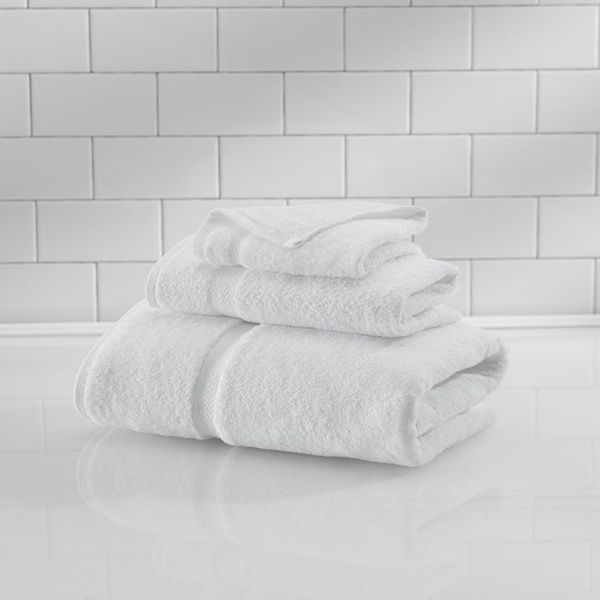
Standard 12 by 12 inch bar towels fit most cleaning carts without overhang. Larger 18 by 18 inch towels work better for floor spills. Standardize on two sizes across all accounts so inventory stays simple and restocking is faster.
Use blue for glass, green for general surfaces, red for restrooms, and yellow for food areas. Print the color name on the towel hem so new hires learn the system quickly. Consistent coding supports audit requirements in regulated facilities.
Recommended products
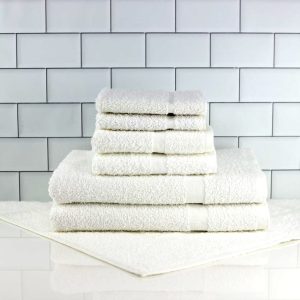
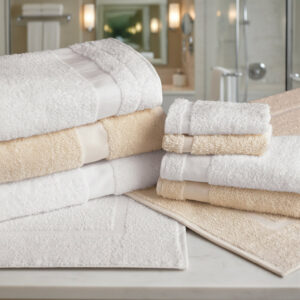
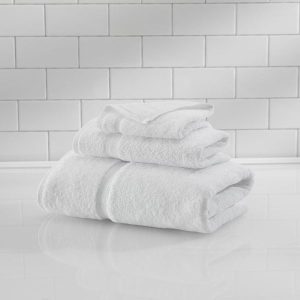
Start with relevant case-packed products, then use the buying guide or Fast Order to refine the purchase.
Buyer FAQs
How do I prevent cross-contamination?
Assign one color per task area and train staff to return towels to the correct bin.
Are flat-weave towels better than terry?
Flat weave leaves less lint on finished surfaces; terry works better for heavy spills.
What minimum order should I place?
Most suppliers accept 10-case minimums with weekly delivery.
Do I need SDS sheets for the towels?
Yes for healthcare and food-service accounts that require full documentation.
Related buying guide
Many janitorial suppliers ship weekly. Confirm the minimum case count and whether they offer standing orders. A predictable delivery schedule keeps storage space free and prevents emergency runs to retail stores at higher prices.
Operational buying note
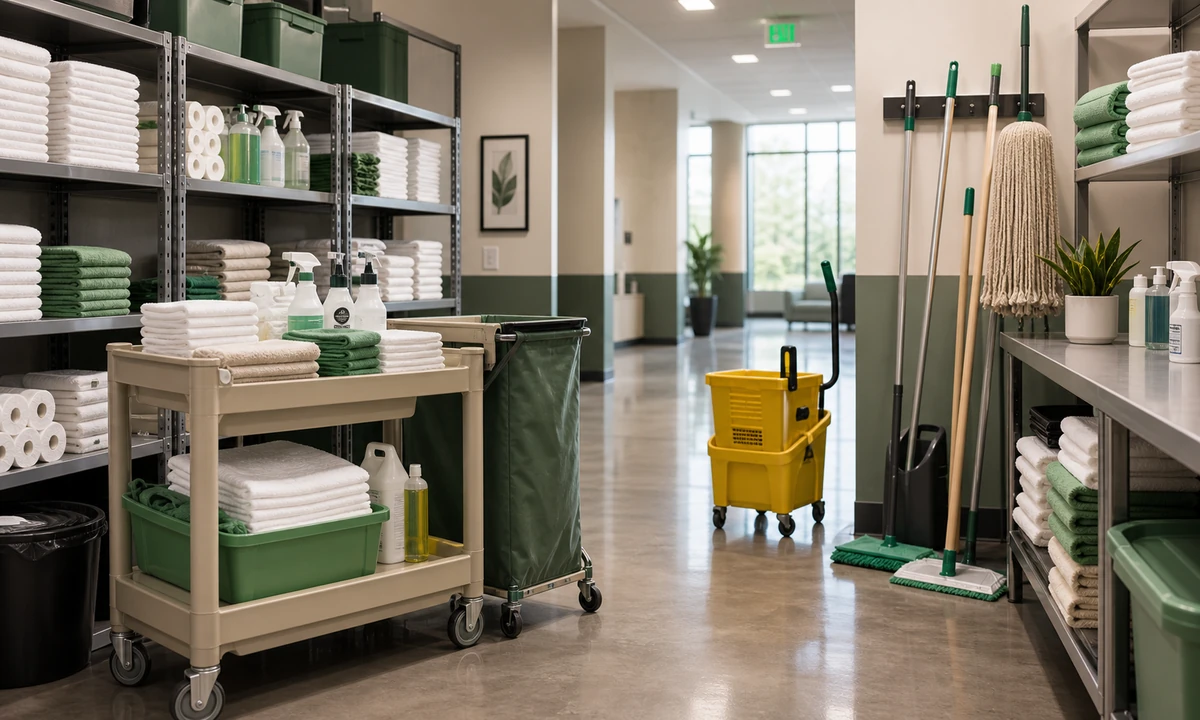
Commercial cleaning teams should separate towels used for customer-facing areas, restroom work, glass, general wiping, and back-of-house tasks. That separation improves hygiene, prevents cross-use mistakes, and makes it easier to buy practical case quantities instead of guessing from job to job.
Janitorial Towel and Wiper Planning Ranges
Janitorial teams need enough bulk towel stock to separate restroom, surface, spill, and utility tasks. Plan by route, building size, and laundering frequency.
| Item | Planning range | Why it matters |
|---|---|---|
| General towels | 12-24 per active cleaner or cart | Covers routine surface work without constant restocking. |
| Restroom towels | 6-12 per restroom zone | Supports task separation and reduces cross-use between areas. |
| Utility/spill towels | 12-24 per facility or route | Keeps absorbent stock available for unexpected cleanup. |
| Replacement stock | 10-20% monthly buffer | Commercial cleaning towels are retired quickly when stained, frayed, or contaminated. |