
Janitorial and Commercial Cleaning Towel Buying Guide
Commercial buying guide
Janitorial and Commercial Cleaning Towel Buying Guide
Choose bulk towels and cloths for cleaning crews, facility teams, route work, restrooms, food-service areas, and spill response.
Quick answer
Janitorial buyers should not treat every towel as a hotel towel. Build separate towel stock for restrooms, food-service areas, surface wiping, spill pickup, and utility work. Prioritize durability, absorbency, easy counting, and clear separation between clean and soiled stock.
Start with the cleaning job, not the towel size
A commercial cleaning route can use several towel types in the same day. The right product depends on what the towel touches, how dirty it gets, and whether it will be reused, washed, or discarded after heavy soil.
- Restrooms: keep separate towel stock and avoid mixing with food or office areas.
- General surfaces: use manageable hand towels or cloths that fit carts and bins.
- Spill pickup: keep more absorbent terry stock available for lower-risk cleanup.
- Food-service or back-of-house: use dedicated dish cloths or kitchen-linen stock.
Separate towels by risk level
The most important janitorial rule is separation. A towel used in a restroom should not be reused on office surfaces. A towel used around food service should not be mixed with utility cleanup. If color-coded towels are available, use them. If not, use labeled bins, separate SKUs, or separate towel sizes.
| Cleaning area | Suggested towel stock | Control rule |
|---|---|---|
| Restrooms | Dedicated washcloths or hand towels | Never mix with food-service or desk-surface towels. |
| General surfaces | Hand towels or lighter utility towels | Store clean and soiled stock in separate cart bins. |
| Food-service/back-of-house | Dish cloths or kitchen linens | Keep separate from restroom and chemical-use towels. |
| Spills/utility | Absorbent terry towels | Retire stained, chemical-damaged, or frayed towels quickly. |
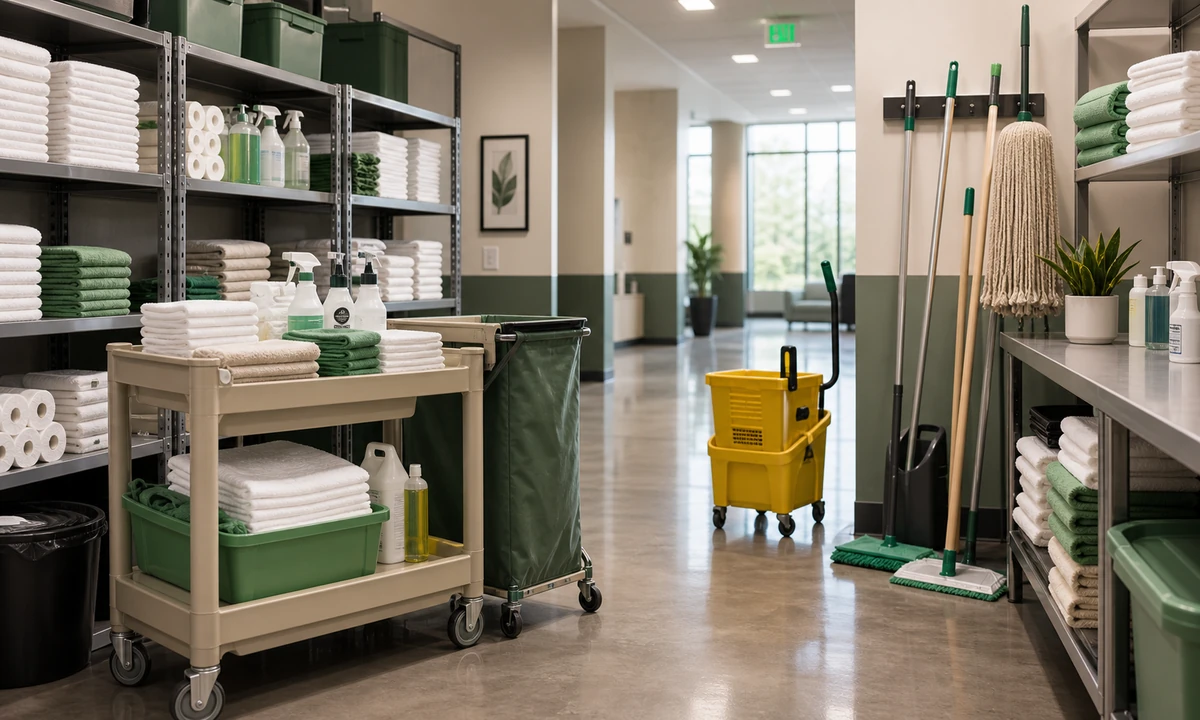


Cotton terry, dish cloths, and utility towels
Cotton terry is useful when absorbency matters. Dish cloths and kitchen linens are better for food-service areas. Lighter towels are easier to carry on carts, but heavier towels absorb more liquid and survive rougher use. The goal is to standardize enough that crews do not guess.
- Use washcloths for small touchpoints and controlled tasks.
- Use hand towels for general surface work, carts, and utility stations.
- Use dish cloths where the cleaning program includes kitchen or back-of-house work.
- Use bath towels only where the facility needs larger absorbent stock, not as the default janitorial towel.
Quantity planning for facility teams
Start with the active route count, not total building size alone. Add a replacement buffer because janitorial towels are retired quickly when they become stained, frayed, contaminated, or damaged by chemicals.
| Item | Starting range | Planning note |
|---|---|---|
| General towels | 12-24 per active cleaner or cart | Covers routine surface work without constant restocking. |
| Restroom towels | 6-12 per restroom zone | Supports separation from other cleaning areas. |
| Food-service cloths | 12-24 per kitchen or back-of-house route | Keeps food-area textiles out of restroom and utility stock. |
| Replacement stock | 10-20% monthly buffer | Allows towels to be retired without disrupting the route. |
Good product starting points
For janitorial and facility cleaning, start with products that are easy to separate by task and reorder by case.
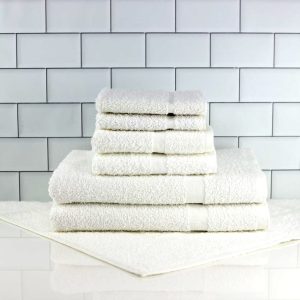
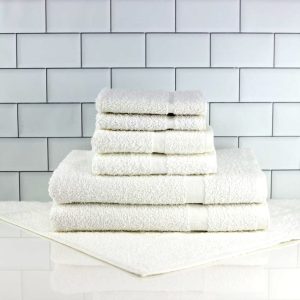
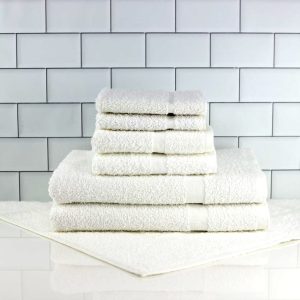
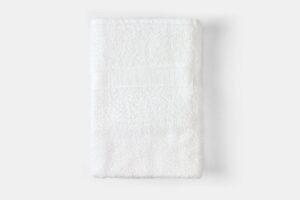
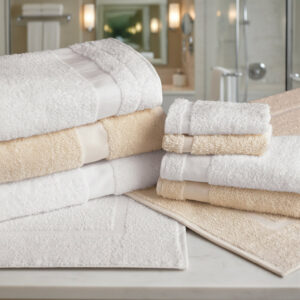
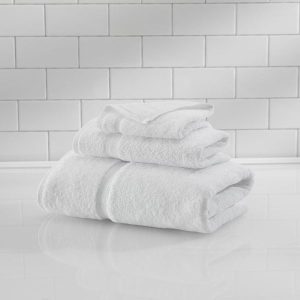
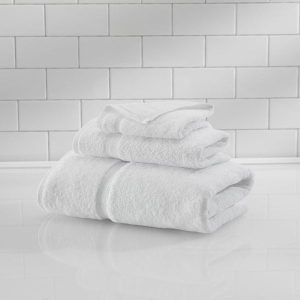
- 1888 Mills Crown Touch hand towels – manageable size for general surface, cart, and station use.
- 1888 Mills Crown Touch hemmed washcloths – useful for smaller controlled cleaning tasks.
- Martex Dish Cloths – relevant for food-service, pantry, and back-of-house textile separation.
Shop janitorial and commercial cleaning towels
Use these product starting points for facility teams, carts, route work, and back-of-house cleaning programs.
Janitorial towel buying FAQs
Should janitorial teams buy bath towels?
Only when the job needs larger absorbent stock for spills or facility use. Most route work is easier with hand towels, washcloths, dish cloths, or other smaller textiles.
How do I prevent cross-contamination?
Use separate towel stock by task. If color-coded products are not available, separate by size, SKU, labeled bins, and laundering process.
How often should cleaning towels be replaced?
Replace towels when they are stained, frayed, chemical-damaged, or no longer suitable for the assigned area. Keep a 10-20% replacement buffer for active routes.