
Towel GSM, Size and Material Guide for Commercial Buyers
Buying guide
Towel GSM, Size and Material Guide for Commercial Buyers
Commercial buyers need clear data on GSM, dimensions, fiber construction, and real-world performance to control both guest experience and laundry operating costs. This guide explains how to match towel specifications to property type, usage volume, and equipment constraints without over-specifying or under-ordering.
Quick answer
Select 500-600 GSM ring-spun cotton bath towels for hotels that want fast drying and 150+ wash cycles. Use 400-500 GSM for pool or gym towels where quick turnaround matters more than plush feel. Blended towels with 20-30 percent polyester reduce drying time by 15-20 percent but lower absorbency per gram. Always request pre-wash samples and calculate cost per use across 100 laundry cycles before committing to a full order
- 500-600 GSM ring-spun cotton delivers the best balance of absorbency and drying speed for standard hotel bath towels.
- Measure actual finished size after first wash because shrinkage of 5-8 percent is normal on 100 percent cotton.
- Blended towels cut dryer time and energy use but absorb 10-15 percent less water than equivalent GSM cotton.
- Request 3-5 pre-wash sample towels and run them through your standard laundry cycle before placing bulk orders.
- Track cost per use by dividing purchase price by expected wash cycles rather than focusing only on upfront case price.
- Higher GSM increases weight and therefore laundry labor and chemical costs per piece.
- Pool and spa towels perform better at 400-450 GSM to reduce drying time and mildew risk in humid environments.
Visual buying checkpoints
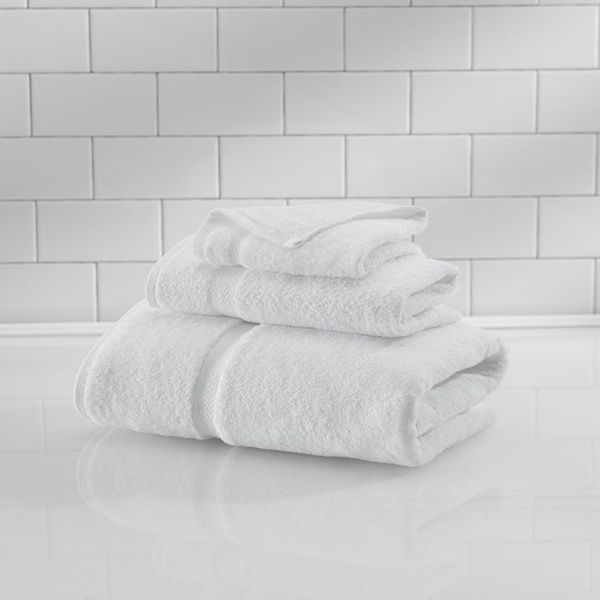
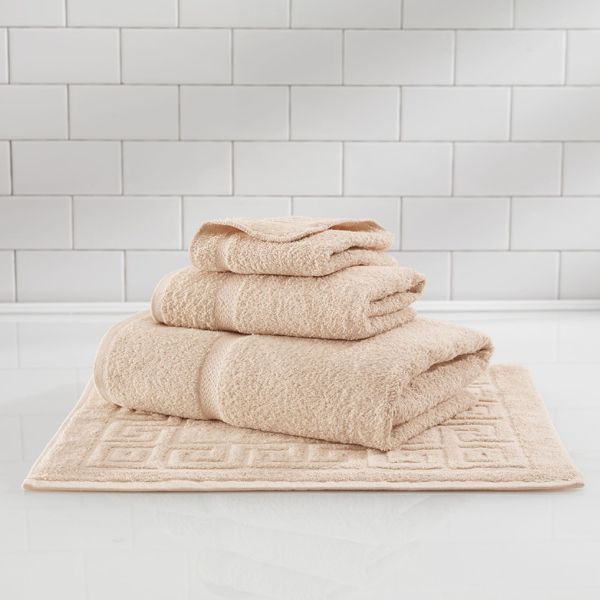
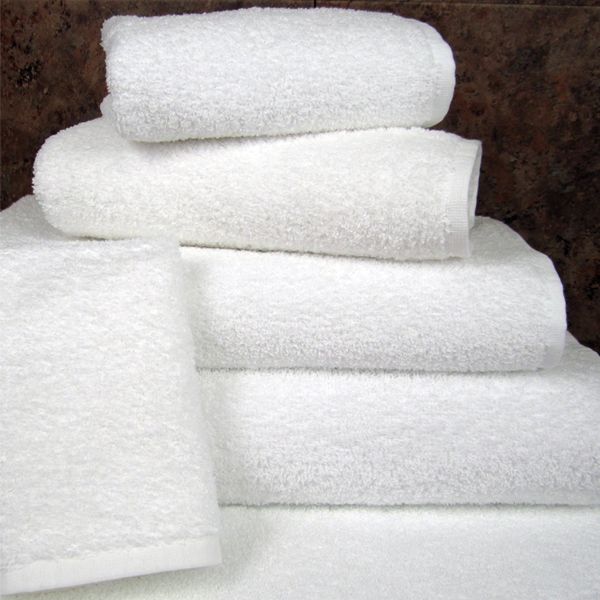
What GSM Means for Daily Operations
GSM measures fabric weight in grams per square meter and directly influences water retention, drying time, and perceived quality. Lower GSM towels feel lighter and dry faster but can feel thin to guests. Higher GSM increases plushness yet raises both purchase weight and energy consumption in the dryer. Commercial operators should test actual drying times rather than relying on GSM numbers alone because weave and finishing also affect performance.
- 400-450 GSM works well for pool and gym towels that need fast turnaround between guests.
- 500-550 GSM is the most common range for mid-scale hotel bath towels.
- 600-700 GSM suits luxury properties willing to accept longer drying cycles.
- Above 700 GSM increases risk of incomplete drying and musty odor in high-volume operations.
- Always weigh finished towels on your scale to confirm actual GSM after laundering.
Standard Commercial Towel Dimensions
Finished sizes determine both guest comfort and storage efficiency. Bath towels typically measure 27×54 inches after washing while hand towels run 16×30 inches. Larger 30×60 bath sheets increase linen cost and dryer load size. Buyers should verify finished dimensions on samples because some suppliers list cut size before hemming and washing. Consistent sizing across lots reduces sorting time on the laundry floor and prevents mismatched sets on guest floors.
- Bath towel: 27×54 inches finished is the industry standard for most hotels.
- Hand towel: 16×30 inches balances coverage with quick folding and stacking.
- Washcloth: 13×13 inches is the most common size for face and hand use.
- Pool towel: 30×60 inches provides better coverage but requires larger dryer capacity.
- Allow 5-8 percent shrinkage when ordering to hit target finished dimensions.
Cotton Construction and Performance
Ring-spun cotton offers better durability and softness after repeated washes compared with open-end yarn. Combed cotton removes short fibers and reduces pilling. Buyers should request yarn type and whether the towel is single-ply or two-ply. Two-ply construction adds weight and absorbency but increases drying time and can feel heavier in guest hands. Consistent fiber length improves longevity across 150-200 commercial laundry cycles.
- Ring-spun yarn maintains softness after 100+ washes better than open-end yarn.
- Combed cotton reduces loose fibers and pilling on dark colored towels.
- Two-ply towels feel thicker but require 20 percent more dryer time than single-ply.
- Egyptian or Pima cotton offers longer staple length but commands higher prices.
- Verify that cotton is not mixed with recycled content unless performance data is supplied.
Blended Towels Versus 100 Percent Cotton
Polyester blends reduce drying time and improve color retention but sacrifice some absorbency. A 70/30 cotton-polyester blend typically dries 15-20 percent faster than all-cotton at the same GSM. This can lower energy costs in high-volume properties. However, blends feel less soft to many guests and may require different detergent formulations to prevent buildup. Test both options on your equipment before deciding on a primary specification.
- Blends cut dryer runtime and reduce energy spend per piece washed.
- Cotton absorbs more water per gram than equivalent GSM blends do.
- Blends hold color better across 150+ commercial wash cycles with chlorine bleach.
- Guest feedback on hand feel should be collected before switching from cotton.
- Blends may require adjusted fabric softener dosing to avoid residue.
Absorbency and Drying Time Testing
Absorbency is measured by how much water a towel holds relative to its dry weight. Commercial buyers should time actual drying cycles on their equipment rather than relying on manufacturer claims. A 500 GSM cotton towel may take 25-30 minutes to dry fully in a 50-pound dryer while a comparable blend may finish in 20-22 minutes. Record results across multiple loads to establish reliable planning ranges for labor and energy budgeting.
- Weigh dry towel, soak in water, then weigh again to calculate absorbency ratio.
- Run timed drying tests on your specific dryer model and load size.
- Higher GSM towels retain more water and therefore extend cycle times.
- Overloading dryers reduces airflow and increases total drying time.
- Track moisture retention after final extract to predict real-world performance.
Durability Across Laundry Cycles
Towel life is determined by fiber strength, construction, and laundry chemistry. Most commercial towels reach acceptable performance for 120-180 wash cycles before noticeable thinning or loss of absorbency. Buyers should request cycle life estimates based on similar properties rather than marketing claims. Track actual replacement rates after installation to refine future specifications and avoid both premature failure and over-ordering.
- Expect 120-150 cycles for standard 500 GSM cotton under typical hotel conditions.
- Chlorine bleach accelerates fiber breakdown and shortens usable life.
- High pH detergents can weaken seams after repeated exposure if not neutralized.
- Inspect hems and selvages for fraying as an early indicator of replacement need.
- Keep records of cycle counts per batch to compare suppliers accurately.
Matching Specifications to Property Type
Budget hotels can operate effectively with 450-500 GSM towels while full-service properties often select 550-600 GSM for guest perception. Resorts with pool and beach access benefit from lower GSM options that dry quickly between uses. Fitness centers prioritize fast turnaround over plush feel. Match GSM and size to actual usage patterns rather than defaulting to the heaviest option available within budget limits. Over-specifying increases both purchase and operating costs without proportional guest benefit.
- Budget and select-service hotels: 450-500 GSM bath towels for cost control.
- Mid-scale and full-service hotels: 500-600 GSM for balanced guest satisfaction.
- Resorts and pool areas: 400-450 GSM to speed drying and reduce mildew risk.
- Fitness centers: 350-400 GSM hand and gym towels for quick reuse.
- Spas: 550-650 GSM for perceived luxury where drying time is less critical.
How to Evaluate Samples Before Ordering
Request finished samples from at least two suppliers and run them through your full laundry process. Measure weight, dimensions, and absorbency after the first and fifth wash. Compare drying times on identical loads. Note any color loss, pilling, or seam issues. This small test prevents large-scale problems after bulk delivery and provides objective data for supplier negotiations on quality consistency across future shipments.
- Order 3-5 finished samples per candidate specification before any bulk purchase.
- Run samples through minimum 5 full laundry cycles before final comparison.
- Record weight loss, shrinkage, and drying time for each sample batch.
- Photograph and note any visible wear after testing to share with suppliers.
- Use the same detergent and temperature settings you will apply in production.
Cost Per Use Planning Ranges
Calculate total cost of ownership by dividing purchase price by expected wash cycles. Include estimated energy and labor costs per cycle where possible. A $4.50 towel that lasts 150 cycles costs roughly $0.03 per use before energy. Adding $0.02 in drying energy brings the figure to $0.05 per use. Compare this metric across cotton and blend options to identify the true lowest-cost choice for your operation rather than selecting on case price alone.
- Divide unit price by projected cycle life to find cost per use baseline.
- Add estimated energy cost per piece based on your dryer data for accuracy.
- Factor in labor time for sorting, folding, and restocking when comparing options.
- Higher initial GSM often increases both purchase price and energy cost per use.
- Update cost-per-use figures quarterly using actual replacement data from your property.
Cost Per Use Planning Calculator
Use these planning ranges to estimate annual towel operating cost based on purchase price and expected laundry cycles. Adjust numbers with data from your own equipment and replacement history for more accurate budgets.
| Scenario | Planning range | How to use it |
|---|---|---|
| Mid-scale hotel bath towel | $0.04 – $0.06 per use | Assumes 500-550 GSM cotton at $4.00-$5.50 unit price and 140-160 cycles. |
| Pool towel | $0.03 – $0.05 per use | Assumes 400-450 GSM blend at $3.50-$4.50 unit price and 120-140 cycles. |
| Budget property bath towel | $0.03 – $0.04 per use | Assumes 450 GSM cotton at $3.00-$4.00 unit price and 130-150 cycles. |
| Luxury bath sheet | $0.07 – $0.10 per use | Assumes 650 GSM cotton at $7.00-$9.00 unit price and 110-130 cycles. |
Cotton Versus Blend Performance Comparison
| Attribute | 100% Cotton | Cotton-Poly Blend |
|---|---|---|
| Absorbency | Higher water retention | 10-15% lower |
| Drying time | Longer cycles | 15-20% faster |
| Durability | 120-180 cycles typical | 140-200 cycles typical |
| Guest feel | Softer after washes | Smoother but less plush |
| Color retention | Fades faster with bleach | Better with chlorine |
Decision flow
Define primary use case and target guest perception level first.
Select GSM range that balances absorbency with your dryer capacity.
Choose cotton or blend based on measured drying time and energy cost.
Request and test finished samples through your laundry process.
Calculate cost per use using actual cycle life from your operation.
Place initial order with clear specs and re-test consistency on first delivery.
Common buying mistakes to avoid
Product examples for comparing towel specs
Use real catalog examples while reading the GSM, size, and material sections so the spec trade-offs are tied to actual wholesale towel options.
- 1888 Mills Crown Touch™ Bath Sheet 35 x 68 100% Cotton White-2 DZ. – good for comparing bath towel size, weight, and guest feel.
- 1888 Mills Crown Touch™ Hand Towels 16 X 30 100% Cotton White-10 DZ. – useful for seeing how smaller towels change dry time and case planning.
- 1888 Mills Fibertone Cabana Solid Pool Towels 30" x 60" – helps compare oversized outdoor towel needs against standard room towels.
Shop related products
Use these product groups as starting points, then use Fast Order for repeat case ordering.
-
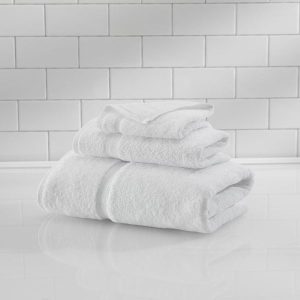
1888 Mills Crown Touch™ Bath Sheet 35 x 68 100% Cotton White-2 DZ.
Price range: $230.40 through $262.80Case of 2 dozen$115.20 - $131.40 per dozen$9.60 - $10.95 eachThis product has multiple variants. The options may be chosen on the product page -
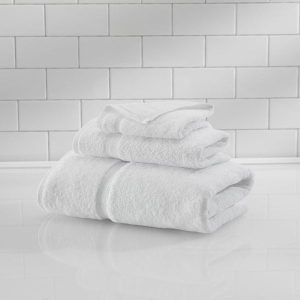
1888 Mills Crown Touch™ Bath Towels 27×54 100% Cotton White-4 DZ. 15 lb
$304.80Case of 4 dozen$76.20 per dozen$6.35 eachThis product has multiple variants. The options may be chosen on the product page$304.80 -
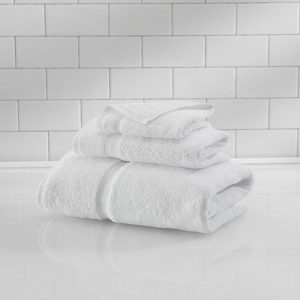
1888 Mills Crown Touch™ Bath Towels 30 X 60 100% Cotton White-2 DZ. 20 lb
$210.00Case of 2 dozen$105.00 per dozen$8.75 eachThis product has multiple variants. The options may be chosen on the product page$210.00 -
Sale!
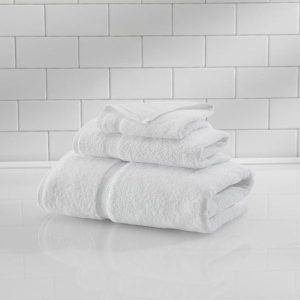
1888 Mills Crown Touch™ Bath Towels White 27×50 14 lb Case of 4 Dozen
Price range: $262.08 through $345.60Case of 4 dozen$65.52 - $86.40 per dozen$5.46 - $7.20 eachThis product has multiple variants. The options may be chosen on the product page -
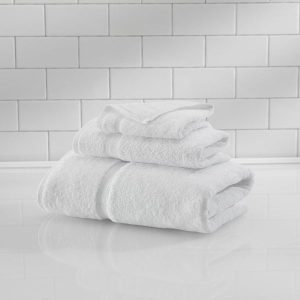
1888 Mills Crown Touch™ Bath Towels White 27×54 17 lb Case of 3 Dozen
$268.20Case of 3 dozen$89.40 per dozen$7.45 eachThis product has multiple variants. The options may be chosen on the product page$268.20 -
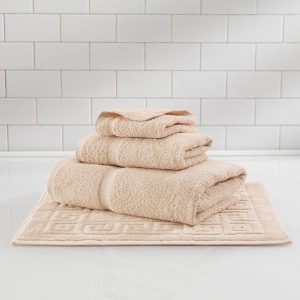
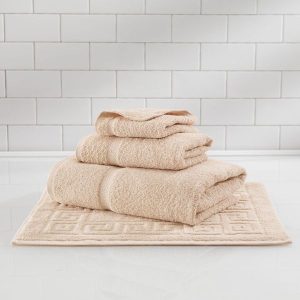
1888 Mills Crown Touch™ Bath Towels-27″ x 54″-Beige-Case of 3 Dozen
$315.00Case of 3 dozen$105.00 per dozen$8.75 eachThis product has multiple variants. The options may be chosen on the product page$315.00 -
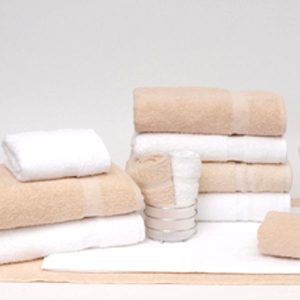
1888 Mills Dependability Bath Towels White 24″ x 50″ 10.5 LB Case of 5 Dozen
$238.40Case of 5 dozen$47.68 per dozen$3.97 eachThis product has multiple variants. The options may be chosen on the product page$238.40 -
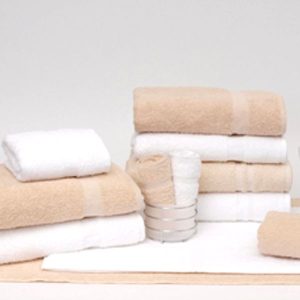
1888 Mills Dependability Bath Towels White 20″ x 40″ 5.50 LB Case of 10 Dozen
$258.00Case of 10 dozen$25.80 per dozen$2.15 eachThis product has multiple variants. The options may be chosen on the product page$258.00
Buyer FAQs
What GSM should I order for standard hotel bath towels?
Most mid-scale hotels select 500-550 GSM ring-spun cotton. This range provides good absorbency while keeping drying times reasonable on standard commercial equipment. Test samples from your specific dryer before finalizing the specification.
Do blended towels really save energy?
Yes. Cotton-polyester blends typically reduce drying time by 15-20 percent at the same GSM. The savings appear in both energy and labor if your operation runs multiple dryer loads per day.
How much shrinkage should I expect on cotton towels?
Plan for 5-8 percent shrinkage after the first commercial wash. Order cut sizes accordingly so finished dimensions meet your requirements after laundering.
How many wash cycles can I expect from commercial towels?
Quality 500 GSM cotton towels usually deliver 120-160 acceptable cycles under typical hotel laundry conditions. Track your own replacement data to refine future orders.
Should pool towels be lower GSM than bath towels?
Yes. 400-450 GSM pool towels dry faster and reduce mildew risk in humid environments. They also handle sand and sunscreen better than heavier plush towels.
Is it worth paying for longer-staple cotton?
Only if guest perception data shows measurable benefit. Longer-staple cottons cost more and may not justify the premium unless you operate at the luxury tier and have confirmed guest feedback on softness.
Build the order
Contact towelwholesaler.com to request finished samples and current pricing for your target GSM and size. Provide your annual volume and laundry equipment details for a cost-per-use comparison between cotton and blended options.
Products to compare while using this guide
Use these products as examples while comparing specifications, sizes, and case quantities.
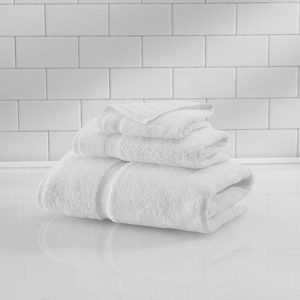
Use specs with the right buying path
Towel specifications are most useful when they are connected to the way a business buys. After comparing GSM, size, material, and laundering tradeoffs, use the industry pages to narrow products by buyer type.