
Healthcare Towel and Linen Buying Guide
Buying guide
Healthcare Towel and Linen Buying Guide
Facilities select towels and linens for repeated commercial laundry cycles, skin comfort, and consistent supply. Focus on fabric weight, blend ratios, and sizing that matches daily resident or patient turnover while controlling replacement costs.
Quick answer
Order bath towels in 20-24 lb per dozen weights for durability across 150+ washes. Plan 3-4 bath towels and 4-6 washcloths per resident or bed. Use fitted sheets with 10-14 inch pockets and add waterproof mattress covers rated for 200+ washes. Reorder when inventory drops below two full changes per bed to avoid service gaps.
- Select towels with 16-24 lb per dozen weights to survive 150-200 institutional wash cycles without excessive linting or tearing.
- Calculate total needs using 3-4 bath towels, 4-6 washcloths, and 2-3 sheets per occupied bed as baseline planning ranges.
- Choose 60/40 cotton-poly blends for faster drying and lower shrinkage compared with 100 percent cotton in high-volume laundry.
- Add waterproof mattress protectors on every bed to extend sheet life and reduce replacement frequency from fluid exposure.
- Maintain par levels of two complete linen changes per bed to support daily turnover without emergency orders.
- Standardize on consistent sizes and colors across all units to simplify sorting and reduce processing errors in laundry.
Visual buying checkpoints
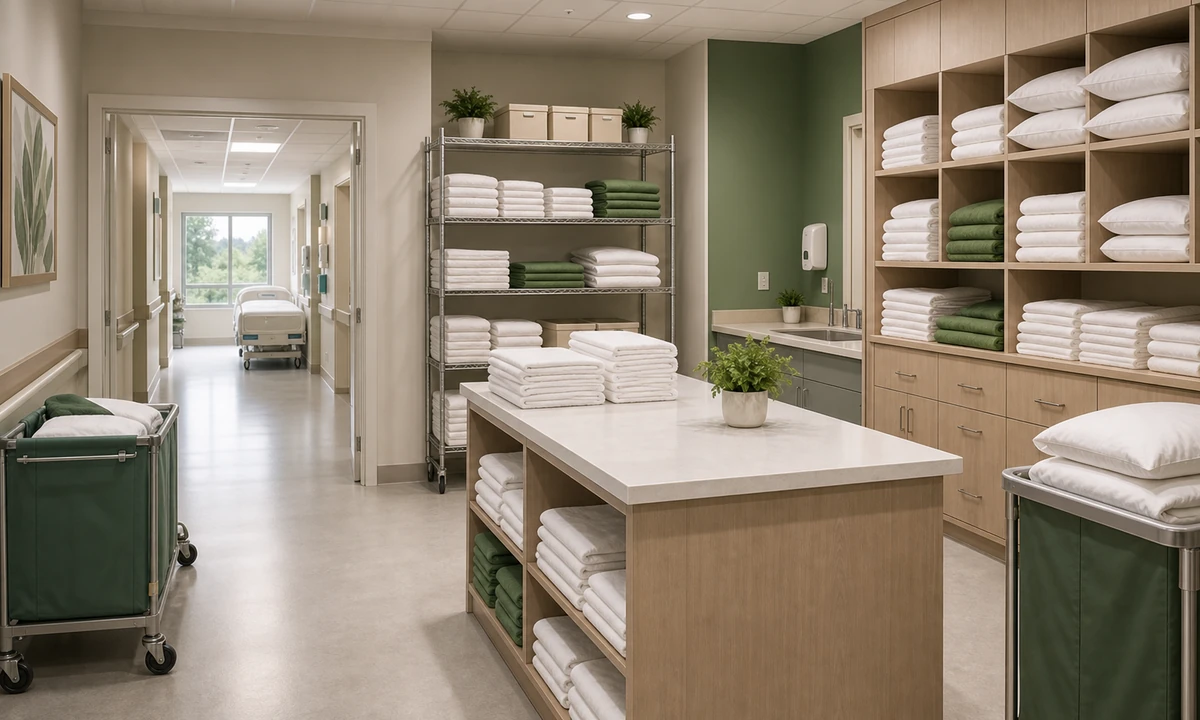
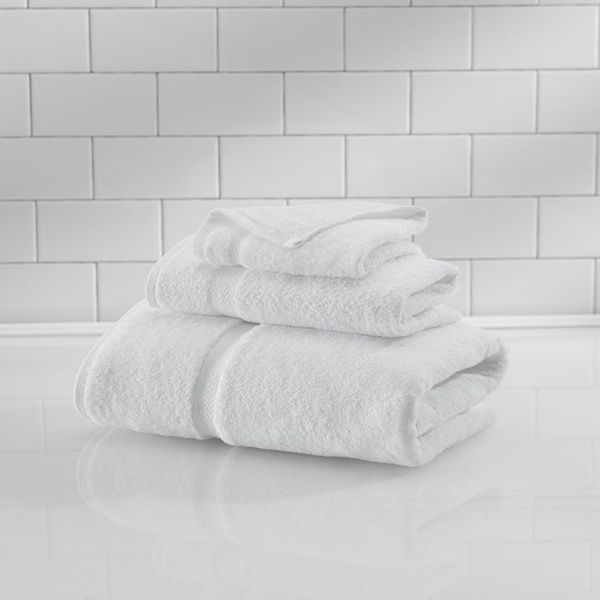
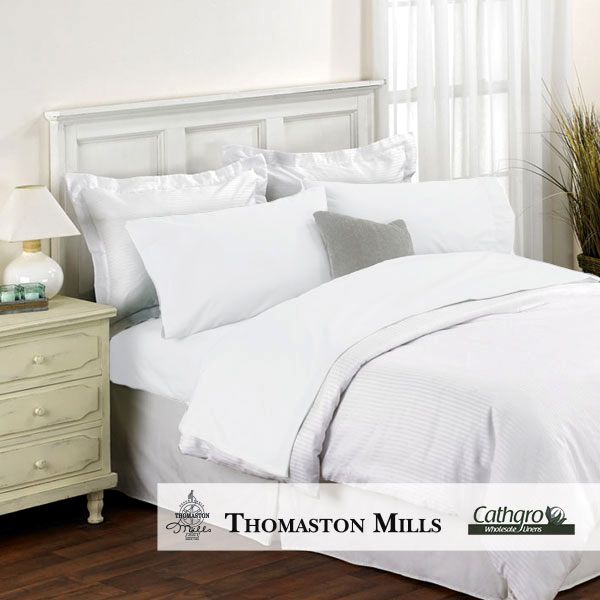
Towel Weight and Durability Standards
Institutional towels must withstand high-temperature washing and drying multiple times per week. Lower weight towels under 16 lb per dozen wear faster and require more frequent replacement. Higher weights above 24 lb increase drying time and energy costs. Facilities typically standardize on 18-22 lb bath towels for balanced performance across clinics and nursing homes. Check terry loop density and selvage construction to limit edge fraying after repeated cycles.
- Weigh sample towels before purchase to confirm stated ounces per square yard or pounds per dozen.
- Request wash test data or run small loads to verify performance under your laundry chemicals and temperatures.
- Avoid lightweight promotional towels that show wear after 50-75 cycles in commercial equipment.
- Track replacement rates by tracking batch dates on incoming stock to identify underperforming SKUs.
- Standardize one or two towel weights across the entire operation to simplify inventory counts.
Resident and Patient Quantity Planning
Quantity estimates start from occupied beds rather than total capacity. Most facilities maintain 3-4 bath towels and 4-6 washcloths per bed as a working range. Add 20 percent buffer stock for peak census or laundry delays. Adjust upward for memory care or bariatric units where soiling rates increase. Review actual usage logs every quarter and adjust par levels to match observed consumption instead of fixed formulas alone.
- Base initial orders on current census plus projected occupancy growth for the next six months.
- Increase washcloth counts in areas with higher incontinence or wound care activity.
- Keep separate emergency stock for isolation rooms that cannot share linen with main supply.
- Reconcile weekly usage reports against deliveries to catch shrinkage or loss patterns early.
- Coordinate with laundry staff on turnaround time when setting reorder triggers.
Bedding and Sheet Selection Criteria
Sheets require consistent sizing, adequate pocket depth, and fabric strength for frequent changes. Flat sheets allow flexible use but need more labor to make beds. Fitted sheets with elastic all around reduce shifting but may wear faster at corners. Target 180-200 thread count percale or 60/40 blends for quick drying and acceptable comfort. Order extra-long twin or full sizes when beds exceed standard dimensions to avoid frequent returns.
- Measure mattress thickness including topper before ordering fitted sheets to ensure proper fit.
- Rotate sheet stock regularly to prevent permanent creasing from long storage.
- Select colors that hide minor staining during the service life of the item.
- Keep a small stock of flat sheets for use as draw sheets or underpad covers.
- Review seam strength and hem quality on samples before committing to bulk orders.
Mattress Protection and Layering
Waterproof covers placed directly on the mattress reduce fluid penetration and extend both mattress and sheet life. Choose breathable polyurethane or vinyl-backed fabrics that survive 200+ washes without cracking. Add absorbent underpads on top of the fitted sheet for targeted protection rather than full mattress coverage. Replace covers when seams split or waterproofing fails to prevent mattress damage claims from residents.
- Inspect mattress covers monthly for pinholes or seam separation during room turns.
- Use quilted or terry-backed protectors where skin comfort is a priority over basic vinyl.
- Keep spare covers sized to each mattress type to allow immediate replacement.
- Train staff on proper removal technique to avoid tearing during resident transfers.
- Log replacement dates to identify covers that fail earlier than expected.
Laundry Cycle Compatibility
Towels and linens must tolerate bleach alternatives, high pH detergents, and 160-180°F drying without excessive shrinkage or fiber breakdown. Request care instructions that specify maximum wash temperatures and bleach use. Test new lots in small batches before full rollout. Track lint filter accumulation and dryer times as indicators of fabric breakdown or improper finishing during manufacturing. Consistent suppliers reduce variation in laundry performance.
- Match product specifications to your laundry equipment capabilities before ordering.
- Avoid over-bleaching programs that shorten towel life by 30-50 percent.
- Separate heavily soiled items to prevent redeposition of soils onto cleaner stock.
- Monitor pH levels in final rinse to reduce chemical damage to fibers.
- Schedule quarterly reviews of laundry chemical usage against linen replacement rates.
Inventory Control and Reorder Triggers
Establish minimum and maximum stock levels based on delivery lead times and weekly usage. Use a two-bin or kanban system for high-turn items like washcloths. Count physical inventory weekly in smaller facilities or daily in larger operations. Set reorder points at two full changes per bed to absorb normal variation without stockouts. Document loss rates from resident damage or laundry errors to refine future orders accurately.
- Record daily issues from central linen room to spot usage spikes quickly.
- Maintain separate counts for each floor or unit to localize problems.
- Review supplier lead times quarterly and adjust safety stock accordingly.
- Dispose of damaged items promptly to keep accurate on-hand counts.
- Compare actual replacement purchases against theoretical wear rates yearly.
Cost Control Through Standardization
Limiting SKUs to two towel weights, two sheet sizes, and one protector type reduces ordering errors and simplifies training. Bulk purchases of standardized items often lower unit cost. Track total cost per occupied bed per month rather than purchase price alone. Include replacement frequency and laundry labor when comparing options. Consistent products also improve resident familiarity and reduce complaints about texture or size changes.
- Audit current SKU count and eliminate sizes or colors with low movement.
- Negotiate annual volume commitments once usage stabilizes for six months.
- Compare total cost of ownership across suppliers using replacement data.
- Pilot new products on one unit before site-wide adoption to measure real impact.
- Document approved substitutions for supply disruptions to maintain consistency.
Sourcing and Supplier Evaluation
Evaluate suppliers on consistent quality, delivery reliability, and ability to scale with census changes. Request samples from current production lots rather than marketing samples. Compare actual weights, seam construction, and colorfastness before committing. Maintain relationships with at least two approved suppliers for critical items to reduce single-source risk. Review performance quarterly using delivery accuracy, damage rates, and invoice correctness.
- Request production samples and run them through your laundry before large orders.
- Track on-time delivery percentage and adjust safety stock when performance slips.
- Require lot traceability for quality issues that appear after washing.
- Review minimum order quantities against your storage capacity and cash flow.
- Include return policies for defective lots in supplier agreements.
Linen Quantity Planning Calculator
Use current occupied beds and average laundry turnaround to estimate starting stock. Adjust ranges after three months of actual usage data. These figures represent planning ranges only and do not replace site-specific counts.
| Scenario | Planning range | How to use it |
|---|---|---|
| Standard nursing home | 3-4 bath towels per bed | Add 15-20% buffer for census swings and laundry delays of 24-48 hours. |
| Memory care unit | 4-5 bath towels per bed | Higher soiling rates require increased par levels and more frequent changes. |
| Clinic or outpatient | 2-3 towels per exam room | Focus on hand towels and washcloths with lower daily volume than resident care. |
| Assisted living | 3 bath towels per resident | Include personal use items and account for resident-owned linens separately. |
Towel and Sheet Comparison
| Item Type | Recommended Weight | Expected Cycles | Best For |
|---|---|---|---|
| Bath towel | 18-22 lb/dozen | 150-200 | Daily resident use |
| Washcloth | 1.5-2 lb/dozen | 150-200 | High-turn cleaning |
| Fitted sheet | 180-200 TC | 100-150 | Standard mattresses |
| Mattress cover | Waterproof PU | 200+ | Fluid protection |
Decision flow
Measure current occupied beds and laundry turnaround time in days.
Select towel weight and sheet type that match laundry equipment limits.
Calculate initial order using 3-4 towels and 2 sheets per bed plus buffer.
Set reorder point at two full changes and monitor weekly usage for 90 days.
Review replacement rates and adjust SKUs or quantities before next bulk order.
Common buying mistakes to avoid
Catalog examples for healthcare purchasing
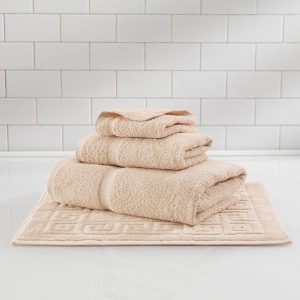
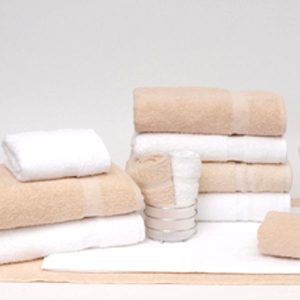
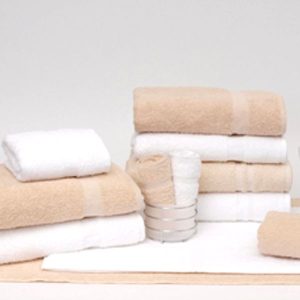
Healthcare textile choices should stay practical: durable towels, room linens, and replacement-friendly products that can be ordered consistently.
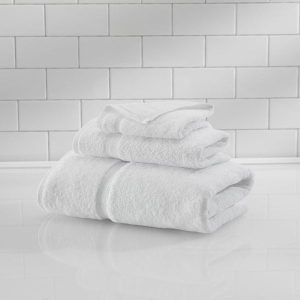
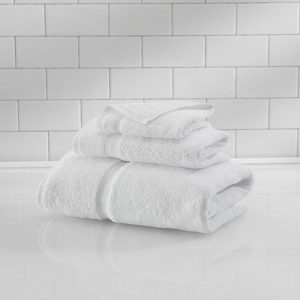
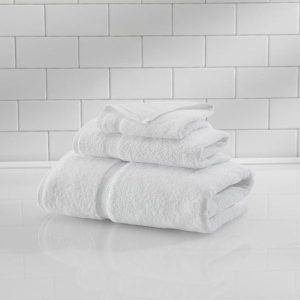
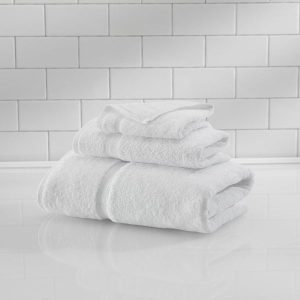
- 1888 Mills Crown Touch™ Bath Sheet 35 x 68 100% Cotton White-2 DZ. – a practical towel category for patient rooms, care facilities, and institutional use.
- Impressions Healthcare Fitted Sheets-Case of 2 Dozen – fits room linen planning beyond towels.
- 1888 Mills Crown Touch™ Hand Towels 16 X 30 100% Cotton White-10 DZ. – useful for sinks, clinical areas, and daily room service.
Shop related products
Use these product groups as starting points, then use Fast Order for repeat case ordering.
Buyer FAQs
How many towels should a nursing home order per resident?
Plan 3-4 bath towels and 4-6 washcloths per bed as a starting range. Increase for units with higher soiling or longer laundry turnaround and reduce only after tracking three months of actual use.
What towel weight works best for commercial laundry?
Facilities commonly select 18-22 lb per dozen bath towels. These weights balance absorbency, drying time, and durability across 150-200 wash cycles under typical institutional conditions.
Should facilities use fitted or flat sheets?
Fitted sheets reduce bed-making time and shifting but may wear faster at corners. Many operations keep both: fitted for standard beds and flat sheets for use as draw sheets or backup.
How often should mattress protectors be replaced?
Inspect monthly and replace when waterproofing fails or seams split. Well-maintained covers typically last 200+ washes before performance drops below acceptable levels.
What blend ratio reduces shrinkage in sheets?
60 percent cotton and 40 percent polyester blends shrink less than 100 percent cotton and dry faster, which helps control energy costs in high-volume laundry operations.
How do I set reorder points for linens?
Maintain stock equal to two complete changes per occupied bed. Trigger reorders when inventory reaches that level plus expected lead time to avoid service interruptions.
Build the order
Review current census and laundry logs, then calculate initial quantities using the planning ranges above. Contact towelwholesaler.com for current options in bath towels, washcloths, sheets, and mattress protection sized for institutional use.