Hospitality Bedding Buying Guide for Hotels and Rentals
Buying guide
Hospitality Bedding Buying Guide for Hotels and Rentals
Wholesale buyers need clear criteria for thread count, fabric weight, seam strength, and fit across multiple room types. This guide covers sheet sets, pillowcases, pillows, and mattress protection with planning ranges and replacement logic used by property managers.
Quick answer
Order sheets in 200-300 thread count percale or 300-400 count sateen for daily commercial use. Plan three to four sheet sets and six pillowcases per bed. Select pillows with 18-24 ounce fill weight and washable covers. Use waterproof yet breathable mattress protectors on every bed. Track laundry cycles to replace sheets every 150-200 washes.
- Match fabric to laundry volume rather than thread count alone for longest service life.
- Use three to four complete sheet changes per bed based on occupancy and turnaround time.
- Select pillowcases with reinforced seams and 4-6 inch hems to reduce tearing during commercial washing.
- Choose pillows with 18-24 ounce fill and double-stitched edges for consistent guest support.
- Install waterproof mattress protectors on every bed to extend mattress life and reduce claims.
- Budget for 10-15 percent annual replacement when running high-turnover properties.
Visual buying checkpoints
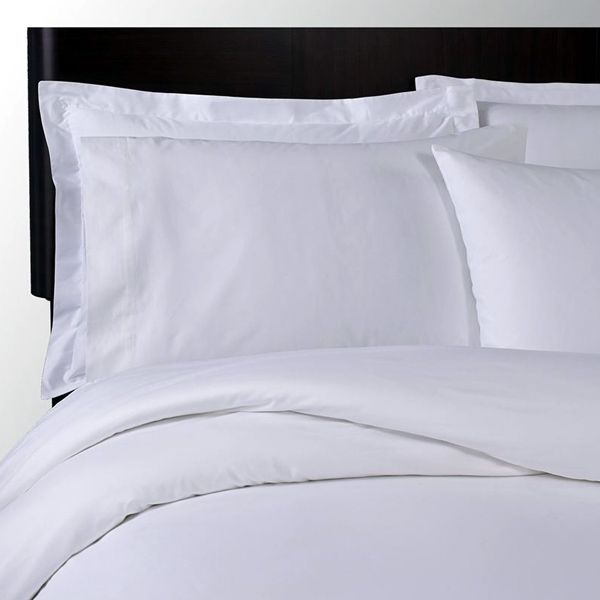
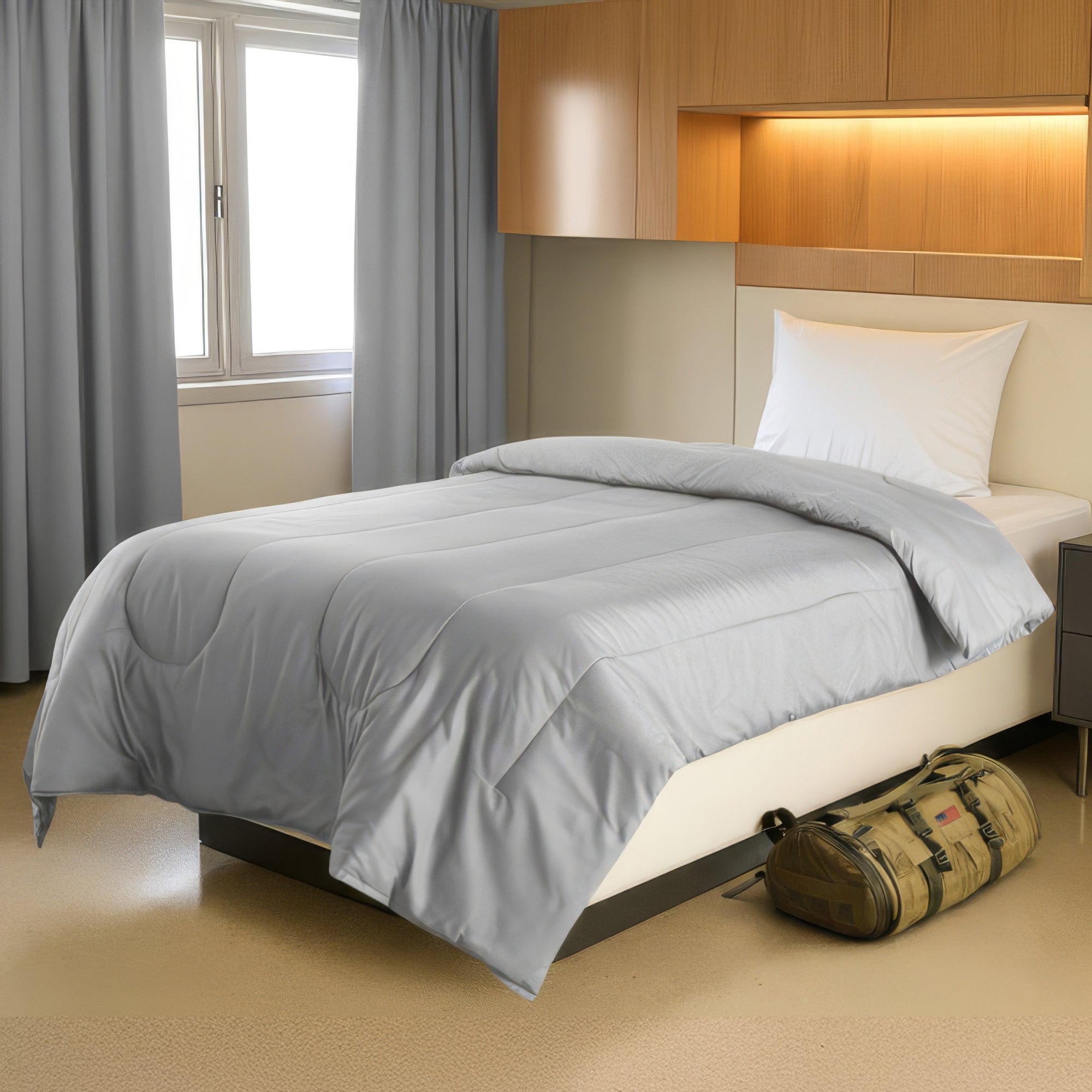

Thread Count and Fabric Weight for Daily Use
Thread count matters less than fiber strength and weave tightness in high-volume settings. Percale weaves at 200-250 threads per square inch deliver crisp hand and fast drying. Sateen at 300-400 threads offers smoother surface but requires lower dryer temperatures. GSM weight above 120 grams per square meter improves durability through repeated commercial laundering. Buyers should request sample swatches and run them through their actual wash process before committing to bulk orders.
- Percale 200-250 TC holds shape after 150+ washes when properly hemmed.
- Avoid counts above 500 in commercial use as they pill faster under heavy agitation.
- Request fabric weight in GSM rather than relying on thread count marketing.
- Test colorfastness on dark sheets before ordering full case quantities.
- Source from mills that pre-shrink fabric to limit size variance after first wash.
Sheet Sizing and Fit Standards
Measure mattress depth including topper before ordering. Standard fitted sheets accommodate 10-14 inch mattresses. Deep-pocket versions handle 15-18 inch profiles common with pillow tops. Flat sheets should allow 18-24 inch tuck on each side for secure hospital corners. Twin XL and Queen sizes cover most hotel and vacation rental inventories. Always confirm finished dimensions on the spec sheet rather than nominal size labels.
- Order 2-4 inch extra depth on fitted sheets when toppers are used.
- Flat sheets sized 108×102 inches fit most Queen beds with proper overhang.
- Request elastic all around rather than corner-only for faster bed making.
- Verify label placement on fitted sheets to avoid guest confusion.
- Maintain separate inventory for standard and deep mattresses to prevent shortages.
Pillowcase Construction and Longevity
Pillowcases experience the highest friction during guest use and washing. Look for double-needle stitching along the cuff and side seams. A 5-6 inch hem adds weight and reduces edge fray. Oxford-style pillowcases with flange borders improve appearance but require extra ironing time. Order cases 2 inches larger than the pillow to allow easy insertion and reduce seam stress during commercial cycles. Track cuff wear as the first indicator for rotation or replacement.
- Reinforced side seams last 30 percent longer than single-stitch construction.
- Order white or light colors to simplify bleach cycles and reduce sorting.
- Keep 25 percent extra pillowcases in reserve for same-day room flips.
- Avoid decorative trim that catches in commercial laundry equipment.
- Rotate cases weekly between beds to even out wear patterns on high-occupancy floors.
Pillow Selection for Guest Comfort
Select pillows by fill weight and cover fabric rather than marketing claims. 18-20 ounce down-alternative pillows suit most transient guests. 22-24 ounce options provide firmer support for longer-stay properties. Washable polyester fills allow full laundering between guests. Feather and down require additional ticking and are less common in high-turnover settings. Always specify double-stitched edges and bartack reinforcement at corners.
- 18-20 oz pillows balance cost and comfort for standard hotel rooms.
- 24 oz firm pillows reduce complaints in extended-stay properties.
- Request removable, zippered covers for easier inspection and replacement.
- Store pillows flat to prevent fill migration during storage periods.
- Plan one spare pillow per ten rooms for quick room-ready swaps during peak periods.
Mattress Protection Options
Every mattress requires a waterproof yet vapor-permeable protector. Vinyl barriers trap heat and cause guest discomfort. Look for polyurethane or TPU membranes laminated to a knit or terry top surface. Full encasements with zippers protect against bed bugs and allergens. Top-only protectors install faster during daily turns. Replace protectors whenever staining appears on the surface layer to maintain hygiene standards.
- TPU membrane protectors breathe better than vinyl and survive 100+ washes.
- Full zip encasements add 8-12 minutes per bed change but block allergens.
- Order protectors sized exactly to mattress depth to avoid bunching.
- Inspect protectors monthly for pinholes caused by sharp objects or heavy use.
- Maintain 10 percent spare protectors for immediate replacement after incidents.
Calculating Par Levels and Inventory
Base par stock on number of rooms, average daily occupancy, and laundry turnaround time. Most properties maintain three to four complete sheet sets and six pillowcases per bed. Add 15 percent buffer for lost or damaged items. Track actual usage for 90 days before finalizing order quantities. Properties with on-site laundry can operate at lower pars than those sending out linen service. Update par counts seasonally when occupancy patterns shift.
- Three sets per bed works for properties with 24-hour laundry turnaround.
- Four sets recommended when linen is processed off-site or during peak season.
- Calculate total Queen sets needed as rooms multiplied by sets per bed plus buffer.
- Review usage logs monthly to adjust for actual loss rates rather than estimates.
- Keep separate par counts for standard and deep-pocket items to prevent mismatches.
Laundry Durability and Replacement Planning
Commercial sheets typically reach end of life after 150-200 wash cycles. Monitor for thinning fabric, seam failure, and color fade. Rotate stock using first-in first-out to prevent older items from remaining in circulation. Budget replacement at 10-15 percent of total inventory annually. Track actual replacement rates by item type to refine future orders and reduce waste from overbuying low-durability products. Request care instructions from suppliers and train housekeeping on proper folding to extend service life.
- Inspect for pilling and seam splits after 120 washes as early warning signs.
- Avoid overloading washers to reduce mechanical stress on fibers and hems.
- Use oxygen bleach rather than chlorine to preserve color on dyed sheets.
- Record replacement dates on tags to identify short-lifespan products quickly.
- Reassess supplier when more than 20 percent of a batch fails before 150 washes.
Budgeting and Supplier Evaluation
Compare landed cost per use rather than unit price alone. Factor in expected wash cycles and replacement frequency. Request mill-direct pricing for orders above 50 cases. Evaluate consistency of sizing and color across multiple shipments. Establish minimum order quantities and lead times before peak season. Maintain relationships with two suppliers to protect against stock shortages during high occupancy periods. Document quality issues with photos and batch numbers for faster resolution.
- Calculate cost per guest night to compare lower-priced options fairly.
- Request pre-production samples from new suppliers before placing bulk orders.
- Negotiate volume discounts at 25, 50, and 100 case thresholds where available.
- Maintain current spec sheets and approved samples for quality reference.
- Review supplier performance quarterly using actual replacement data.
Par Level Planning Calculator
Estimate total sheet sets and pillowcases required based on room count and laundry cycle. Adjust the planning range after tracking actual usage for one quarter.
| Scenario | Planning range | How to use it |
|---|---|---|
| 25-room inn | 75-100 sheet sets | Assumes 3 sets per bed and same-day laundry turnaround with 15 percent buffer. |
| 60-room hotel | 210-280 sheet sets | Use 3.5-4 sets per bed when linen is processed off-site or during peak season. |
| 120-room property | 420-550 sheet sets | Add extra for conference groups that increase daily room turns. |
| Vacation rental portfolio | 4-5 sets per unit | Higher par needed due to longer guest stays and variable laundry access. |
Fabric and Protector Comparison
| Feature | Percale Sheets | Sateen Sheets | TPU Protectors |
|---|---|---|---|
| Best for | High-turnover hotels | Boutique properties | All mattress types |
| Wash cycles | 150-200 | 120-180 | 100+ |
| Drying speed | Fast | Moderate | Moderate |
| Guest feel | Crisp | Smooth | Cool touch |
Decision flow
Measure mattress depth and note any toppers before ordering fitted sheets.
Select percale or sateen based on desired hand feel and laundry equipment limits.
Set par levels using room count, occupancy, and laundry turnaround data.
Order protectors with TPU membrane for every bed to reduce replacement costs.
Track wash cycles and actual replacement rates for 90 days before reordering.
Common buying mistakes to avoid
Catalog examples for hospitality bedding packages
The bedding guidance is strongest when sheets, pillows, and protection are planned together as a room package rather than bought as isolated items.
- 1 Concier Percale T-200 Sheets-XL Full Fitted – a direct starting point for sheet set comparisons.
- Brentwood II Pillow-Jumbo Size 20" x 28" Case of 10 – fits the guest-comfort part of a bedding refresh.
- 1st Quality RESTGUARD Mattress Pad – supports the guide’s recommendation to protect mattresses and pillows from the start.
Shop related products
Use these product groups as starting points, then use Fast Order for repeat case ordering.
-

1 Concier Percale T-200 Sheets-XL Full Fitted
$296.40This product has multiple variants. The options may be chosen on the product page$296.40Case of 24$12.35 each -
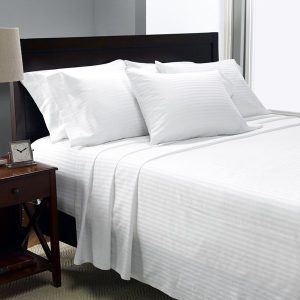
1888 Mills LOTUS T-250 Cotton Rich Blend Tone On Tone Sheets-White-Standard Pillowcases-Case of 6 Dozen
$187.20Case of 6 dozen$31.20 per dozen$2.60 eachThis product has multiple variants. The options may be chosen on the product page$187.20 -
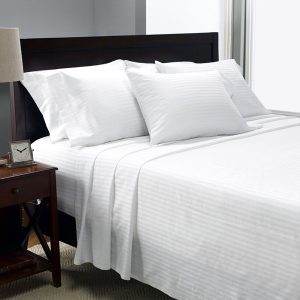
1888 Mills LOTUS T-250 Cotton Rich Blend Tone On Tone Sheets-White-King Flat-Case of 1 Dozen
$237.00Case of 1 dozen$237.00 per dozen$19.75 eachThis product has multiple variants. The options may be chosen on the product page$237.00 -
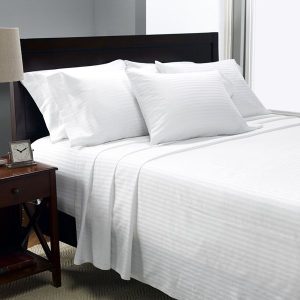
1888 Mills LOTUS T-250 Cotton Rich Blend Tone On Tone Sheets-White-King Fitted-Case of 1 Dozen
$234.00Case of 1 dozen$234.00 per dozen$19.50 eachThis product has multiple variants. The options may be chosen on the product page$234.00 -
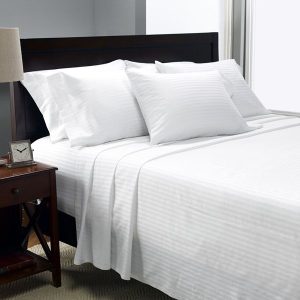
1888 Mills LOTUS T-250 Cotton Rich Blend Tone On Tone Sheets-White-King Pillowcases-Case of 6 Dozen
$237.60Case of 6 dozen$39.60 per dozen$3.30 eachThis product has multiple variants. The options may be chosen on the product page$237.60 -
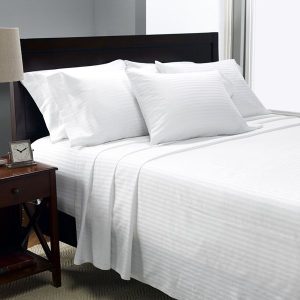
1888 Mills LOTUS T-250 Cotton Rich Blend Tone On Tone Sheets-White-Queen Fitted-Case of 1 Dozen
$208.20Case of 1 dozen$208.20 per dozen$17.35 eachThis product has multiple variants. The options may be chosen on the product page$208.20 -
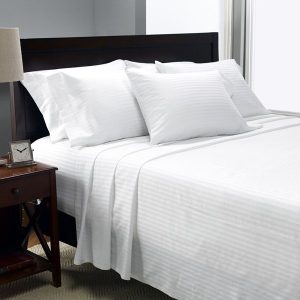
1888 Mills LOTUS T-250 Cotton Rich Blend Tone On Tone Sheets-White-Queen Flat-Case of 1 Dozen
$216.00Case of 1 dozen$216.00 per dozen$18.00 each -
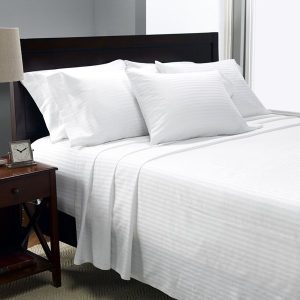
1888 Mills LOTUS T-250 Cotton Rich Blend Tone On Tone Sheets-White-XL Full Fitted-Case of 2 Dozen
$378.00Case of 2 dozen$189.00 per dozen$15.75 eachThis product has multiple variants. The options may be chosen on the product page$378.00
Buyer FAQs
What thread count should hotels order for sheets?
200-250 thread count percale or 300-400 sateen performs best in commercial laundry. Higher counts often pill faster under heavy agitation and offer no durability advantage.
How many sheet sets per bed are recommended?
Plan three to four complete sets per bed. Properties with on-site laundry can operate at the lower end while off-site service or high occupancy requires the higher range plus buffer.
Should mattress protectors be full encasements or top-only?
Top-only protectors install faster for daily use. Full zip encasements add protection against allergens and bed bugs but increase bed-making time by several minutes per room.
How often should commercial sheets be replaced?
Most quality sheets last 150-200 commercial wash cycles. Track actual failure rates by batch rather than using fixed calendar replacement schedules.
What pillow fill weight works for most guests?
18-20 ounce down-alternative pillows suit standard transient rooms. Increase to 22-24 ounces for properties with longer average stays or guest requests for firmer support.
How do I calculate total bedding inventory needs?
Multiply room count by sets per bed, then add 15 percent buffer. Adjust after tracking real usage for one quarter to account for loss and damage rates.
Build the order
Review current sheet, pillow, and protector stock against these planning ranges. Contact towelwholesaler.com for wholesale pricing on hospitality-grade bedding and to request fabric samples for testing.
Products to compare while using this guide
Use these products as examples while comparing specifications, sizes, and case quantities.